



Creating and Supporting the
Village to Raise the Child
-
-
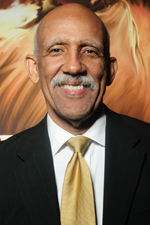
Elder Paul Hill
- Country: USA
- City : Cleveland
- State: Ohio
- Company: National Rites Of Passage
- Email:Paul@nropi.org
It takes a village to raise children; however, if the children are not initiated they will burn down the village
Paul Hill, jr
Group X Fellow
The Journey of life is a series of passages that must be bridged to fulfill our purposes for being. The journey begins with birth and ends with death. Life is a succession of stages or passages.

We are not unlike the lobster. The lobster grows by developing and shedding a series of hard protective shells. Each time a new shell forms, the old shell must be sloughed off, sometimes painfully left exposed and vulnerable until, in time, the new covering grows, replacing the old. With each passage from one stage of human growth to the next we, too, must shed a protective structure. We are left exposed and vulnerable also yeasty and embryonic again, capable of stretching in ways we hadn't known before.
Everything that happens to us birthdays, baptisms, graduation, getting a job, losing a job, marriage, childbirth, divorce, death, affects us. Adolescence as a stage of life is one of the most difficult and important. It is that period of time in betwixt and between. It is that prolonged period of development between childhood and adulthood. Countless young males and females in contemporary America who refuse to assume the responsibilities of adulthood, and who are consumed by childish narcissism, condemn themselves to the Peter Pan never-never land of perpetual adolescence.
In traditional societies the in betwixt and between period of childhood and adulthood was regulated by family/community so that age class members or individuals in a group successfully came to know themselves and purpose for existence. With that, there existed a clearly defined state of existence in their lives navigated by family/community. There was little room for the "unplaced person" who had yet come to terms with his or her society or purpose as an integral part of the community. In part, the creation and extension of adolescence in current time is a reflection of a casual developmental motif in modern social structures. The distinctions between the developmental stages of a person's life in American culture have become blurred. A chasm has been created with respect to an individual's development from childhood to maturity; it has been filled by loosely defined adolescence that can appear to have no end.
The casual motif can be evidenced by the decline of ritual and ceremony in a secularized world. Formalized definitions of transition such as graduation or religious confirmations play a relatively minor role in our social life. The function of ritual, in previous family/community, imbued developmental events with meaning and cause for celebration of transition from one stage to another: old shells shed and new shells created. In modern context, ritual seems to trivialize an event. Social scientists with a wide range of ideological and ethnic perspectives have concurred that: there is no evidence that people living in a secular urbanized world have less need of ritualized expression for their transition from one status to another (Cohen, 1964, Hill, 2004)). The need remains for those to demonstrate within a social/community how, where, and why the young lobster exists and to coax old shells off in preparation for new shells to grow.
An increasing number of individuals are forced to accomplish their transitions alone and with private symbols of meaning. The casual motif in modern society may eliminate the dramatization and celebration of the passage from childhood to adulthood, but it does not necessarily eliminate the felt need for the individual to undergo that transition. The failure of modern society to prepare adolescents and take seriously the need for community acknowledgement of the passage during adolescence has contributed to disruptive social groups such as youth gangs and the mid-life crisis of the "unplaced" or "uninitiated" persons. The results of discarding customs, rituals, and ceremony are the headlines of the major newspapers of America, crime and the like (Campbell, 1988). Old shells are never shed, unable to withstand responsibilities of adulthood.
What is necessary to bridge adolescence one of the difficult passage periods of the journey of life?
Although many of our social and psychological problems surface as early as the preschool years, our cultural disorientation becomes evident in our remarkable failures with the life passages of puberty and the stage of life following. Adolescence remains the developmental phase in which most contemporary people get stuck and where the most need the greatest support. Adolescence holds the key to our becoming whole and human (Plotkin, 2008).
The Encyclopedia of World problems and Human Potential declares the current lack of the ritual of rites of passage as urgent global problem: "the absence of rites of passage leads to a serious breakdown in the process of maturing as a person. Young people are unable to participate in a society in a creative manner because societal structures no longer consider it their responsibility to intentionally establish the necessary marks of passing from one age-related social role to another, such as child to youth, youth to adult, adult to elder. The result is that society has no clear expectation of how people should participate in those roles and therefore individuals do not know what is required by society" (Grimes, 2000). Who guides the young lobster whose time has come to shed ones shell so that the new fortified shell may take its place?
What are rites of passage and its developmental uses for young men of color? (Hill, 1992) The rituals and ceremonies that accompany the passages are called rites of passage. Anthropologists Arnold Van Gennep derived the term rites of passage from empirical observation of indigenous groups in African and Australia. The analysis of ceremonies accompanying the individual's "life Crisis" Van Gennep called rites de passage is usually considered his to be his unique contribution.
Human existence reflects a number of transitional periods during the seasons of life. The various changes in status during the transitional periods calls for rites of passage to cushion the disturbance. These changes can be dangerous, and at least, they are upsetting to the life of the group and the individual. In one sense all life is transition, with rhythmic periods of quiescence and heightened activity.
Rites of passage as an adolescence developmental and transformational process are culturally specific and not universal. It is based on the multi-cultural premise that a group must recognize and affirm itself before it is able to share and appreciate the differences of others. This is contrary to the traditional mainstream view that success for minorities is dependent upon assimilation into white society. Assimilation implies superiority on the part of the assimilating culture, which is used as the norm by which all others are measured. This relationship often provokes subtle and overt alienation and resistance. Literature on culture, racial identity and academic success indicates that African American, Latin, Asian and Native American---ALANA---children succeed by using their racial identity and socialization in response to racism and oppression, and as a means of knowledge production and self-actualization (Merdiano, 2010, Fordham, 1993, Hanley, Noblit, 2009). Many African, Latino, Asian and Native Americans are faced with negotiating racism while continuing to prove that it is possible to both live their cultural heritage and achieve in school, the community and work. It is a failure of society and community that these negotiations remain difficult shells in which the aforementioned navigate.
Rites of passage are a youth development and community building strategy used as a culturally responsive and appropriate program for working with young men of color in an education setting. Through rites of passage which have to be culture-specific for each ethnic group, culture becomes a unifying springboard for world knowledge, enabling them to cross borders of knowledge and culture, secure in knowing that their understanding and experiences are valued, as are others'. Within a global perspective they envision who and where they are, as well as others" within a global community (Casimir, 2007). And within that context old shells are shed and new ones formed that not only protect the individual against developmental assaults and toxins, but become a fortified foundation upon which then they may carry others.
Culturally responsive pedagogy through rites of passage can serve as a spring board for ALANA children as a strategy for racial identity, resilience and achievement. The long history of studies on the schooling of ALANA children reveals that for many years the research was flawed by what the literature refers to as an "assimilation logic". That is, it was assumed the once ALANA students were assimilated into white society, academic success would follow. It also was assumed that students were best served when they gave up their culture as part of being schooled. While assimilation is not a new objective in the education of African American students, it has become the dominant paradigm of public education since the desegregation of the schools ordered by the 1954 U.S. Supreme Court case of Brown vs. Board of Education (Hanley, Noblit, 2009)
Finally, in order for schooling staff to use the principles of rites of passage and integrate rites of passage as part of educational setting they must have an understanding of the foundations and practice of culturally responsive pedagogy and positive ethnic socialization. There is an African proverb that translate "you can bring someone only as far as you have been yourself". Relationships are a key element of rites of passage. Those who have an interest in using the principles of rites of passage in an educational setting need training and professional development to build their personal awareness and resources.
There are ten culturally responsive themes which are foundational and must under gird rites of passage as a strategy for youth development and community building in any setting.
The following are an adaptation and expansion of nine themes identified in recent research commissioned by the Heinz Endowments on the connection between racial identity and school success: use culture to promote racial identity; use culture and racial identity as an asset; educate about racism and racial uplift; use the arts; develop caring relationships; assume success; promote active learning, promote experiential learning and problem solving in a nature setting; promote youth involvement; involve the community; acknowledge the challenges (Hanley, Noblit, 2009)
We cannot escape our origins, however hard we might try, those origins contain the key could we but find it to all that we later become. – James Baldwin, Notes of a Native Son References Cohen, A. Y (1964) Ceremonies in the second stage of puberty: Childhood to Adolescence. Chicago, Aldine Publishing Campbell, Joseph, (1988) The Power of Myth. New York: Doubleday Casimir, J. Michael (2007) Culture and the Changing Environment, Berghahn Books Plotkin, Bill, (2008) Nature and the Human Soul. California, New World Library Grimes, Ronald (2000) Deeply Into The Bone: Re-Inventing Rites of Passage, Berkeley, University of California Press Hill, Paul (1992) Coming of Age, Chicago: African American Images Hill, Paul (2004) "Passages: Birth, Marriage, and Death," In Jacob U. Gordon The African Presence In Black America, 2004, New Jersey: African World Press, Inc. Medrano, Lourdes (2010) Ethnic Studies Classes Illegal in Arizona public schools as of Jan. 1. The Christian Science Monitor, December 31, 2010 Fordham, Signithia, (1993) Racelessness as a Factor in Black Students' School Success: Pragmatic Strategy or Pyrrhic Victory? Facing Racism in Education, Harvard Educational Review, Reprint Series No. 21, 232-266 Hanley Stone, Mary, Noblit W, George, (2009) Cultural Responsiveness, Racial Identity and Academic Success: A Review of the Literature (Executive Summary), Pittsburgh, Heinz Endowments
Respectfully,
Paul Hill jr.
Related speakers

David Miller Urban Leadership Institute
